
Thermal soaring
A way of flying in which the aircraft rides rising currents of air – thermals. They keep a glider aloft without an engine and can carry it hundreds of kilometers, just like birds circling with their wings spread wide.

From sun to cloud
- ☀️The sun warms the ground
Fields, rocks and towns heat up faster than forests or water. The air above them gets warmer and lighter.
- ⬆️Warm air rises
An invisible column forms – a thermal – in which the air rises at 1 to 10 m/s.
- ☁️A cumulus forms at the top
As the rising air cools, it forms the typical fluffy “cotton-wool” cloud. For a pilot, it's a sign: the air is rising here.
- 🌀The glider circles upward
In the thermal, the pilot circles like a bird of prey and gains height – no engine, powered by the sun alone.
Reading the sky
- Clouds – the flat base of a cumulus reveals where the air is rising most strongly.
- Terrain – sunlit slopes, fields and towns are the best thermal “generators”.
- Variometer – an instrument that beeps to show whether you're climbing or sinking. In the photo, it's on the right side of the cockpit.
- Birds and other gliders – wherever they're circling, there's a thermal.
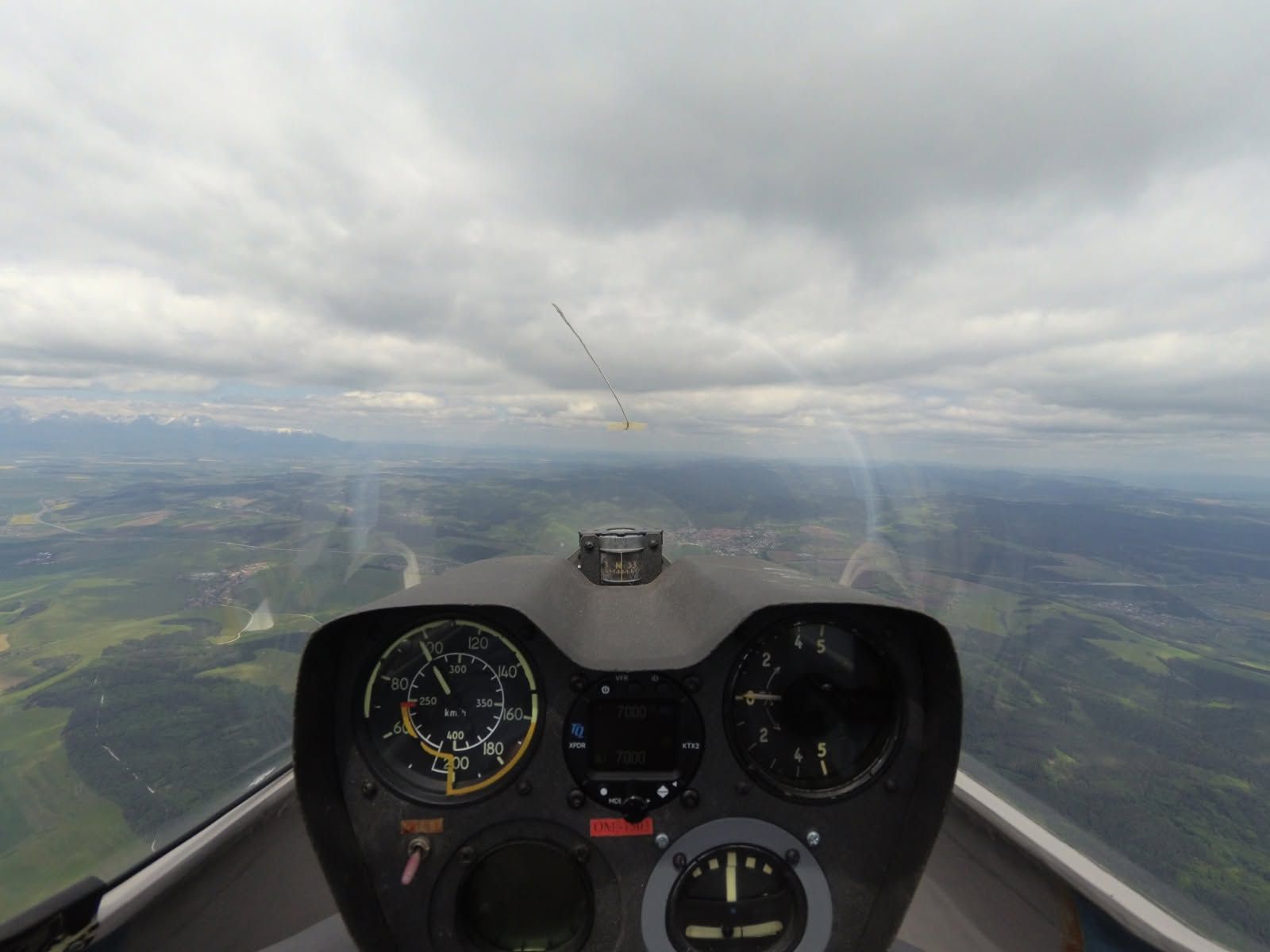

Up to 8,000 meters
Besides thermals, our aero club pilots also fly the wave behind the High Tatras. In strong winds, a wave forms in the air behind the ridge that can lift a glider to around 8,000 m – far above the clouds.
More about the Tatra wave at lzsv.sk ↗Experience a thermal first-hand

Glider flight
A silent, engine-free flight with an aero club pilot in a Super Blaník L-23 or Duo Discus XLT.
from €79 →
Pilot for a Day
60 minutes at the controls of the glider yourself – with an instructor right beside you.
from €199 →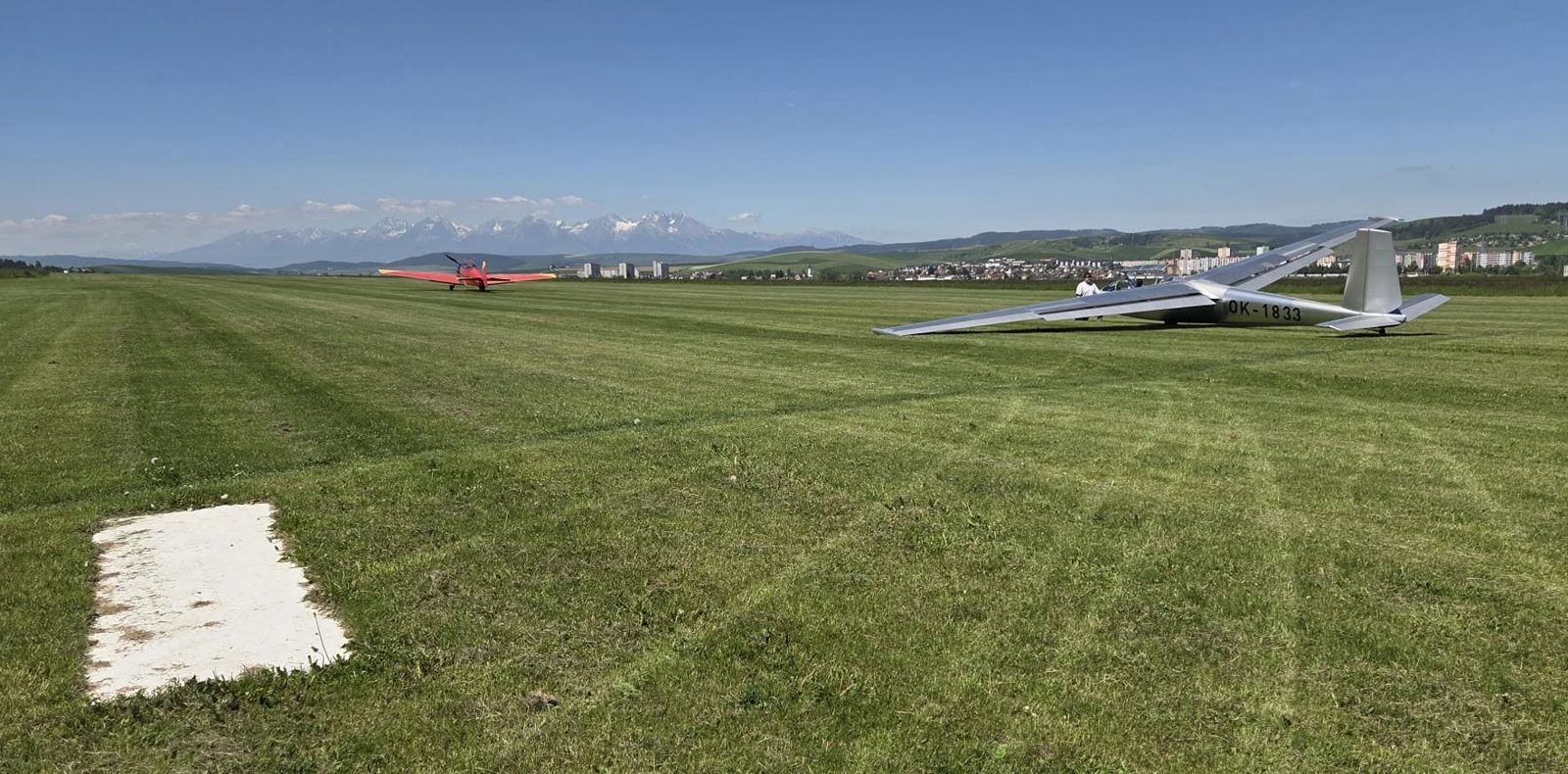
SPL glider pilot training
Learn to soar in thermals on your own. A licence valid across the EU.
€1,990 →